Category Archives: Uncategorized

Hidden Treasures

Standard

It is rare to find an item that is capable of bridging several concepts to create a strata of meaning. I stumbled across something of great significance (even if only to me) and would like to share it here at RCompass.  I should preface this post by noting that I struggled with writing it. I found it difficult to properly convey the depth of meaning from the collision of concepts that occurred. So if you will bear with me- here is my account of how one small purchase made a lasting impact in my life!

My Purchase

Over the last few years, I toyed with the idea of purchasing a ring for myself. I knew I wanted something of value that resembled me-reflecting my life at least in some small way.  About 3 months ago, I stumbled upon a vintage ring online and then again, about a month later. Although I didn’t find the overall style striking, the compass setting definitely caught my eye.  However, it was ultimately the allure of the story, connected to this piece, that I found compelling. The seller, InVogue Jewelry, placed a small footnote at the bottom of the picture indicating that she inherited a collection of jewelry from her aunt who was an avid journal-er that spent a significant portion of her life traveling around the world. She would store her found treasures with a description/message about each piece.  This particular ring was in a little box with a note that said, “France, Museum Reprod., Real”.  

Ellen’s Story

After buying the ring, I contacted the seller and told her a little about my passion for travel and asked if she would be able share any additional information about my purchase.  It turns out that Ellen had a remarkable life that spanned ninety years. It was marked by an abrupt separation from biological family and later the loss of her only son; enhanced by a deep love she shared with her husband; steadied with perseverance to move beyond the circumstances unfolding in her life; and enriched through travel.  After returning home from a trip to Africa, at the age of 90, she passed quietly in her sleep.

By Design

The ring is an early Renaissance inspired, museum replica. It is set in a compass design with four, bezel set, garnet stones and four cultured pearls. At the center, is a small, square cut lapis stone. I associate this ring to paintings created in this time period which were often infused with hidden stories, captured subtly in the design. I can’t help but think of how much thought may have gone into the design of this piece? I can only speculate why Ellen may have been drawn to this particular ring. But, if I take aspects of Ellen’s story-it made me wonder if she also connected to (or believed in) the meaning and properties of the stones used?

  • Garnet signifies discovery and protection
  • Pearls represent transformation and innocence
  • Lapis is said to promote clarity and truth

A special note: In her home, Ellen installed a compass, thoughtfully in-laid in the tile of her foyer visible as she passed through the front door, returning “home” from her travels.

Our Connections

When I began developing this blog, I wrote the content for the page titled, RStory stating that,

“This blog is a nod to the compass (or rose compass) in its truest and simplest form.  Steeped in tradition, it is a tool that has been in existence for centuries, an aid, to find position and direction. This can be seen both in the physical world, and for me, a compass also is a symbol, an essence of how people may look for direction and purpose in life.

I have come to recognize that sometimes it takes time to uncover a serendipitous meaning and to see beyond the obvious facade. To my surprise, I had come to realize that the stones also had significance to me. After experiencing a series of life altering events, I began my Master’s in Tourism and Geography which I attribute to a major shift in my life’s direction (school colors red garnet).  My driving force is my family-specifically my son (his birthstone is the pearl). The lapis is linked to my zodiac sign (Sagittarius) which reaffirms the core (center) of my identity and, of course the compass which I refer to as my personal amulet and/or talisman.  I also studied French for several years. And have a deep seeded interest in museums exhibiting historical art.

Yes, it is enough to just admire something “pretty” and want to possess or own it. And, yet if we can derive something more, I believe those are the treasures ultimately worth collecting. As they say, beauty is in the eye of the beholder.  This story reminds me that even inanimate objects can have a life all their own that resides in the experiences of the people who collect and display them. Perhaps this story was relevant only when filtered through my eyes and personal journey? I keep a copy of Ellen’s story with the ring. And I will proudly wear it for many years. When the time comes, I know that it will find another world traveler to keep it safe….and  it’s story will continue.

I would like to thank Dawn, InVogue Jewelry, for sharing Ellen’s incredible story which allowed me the unique opportunity to connect at a deeper, more meaningful level.  Here is a link if you would like to visit her shop on Etsy.
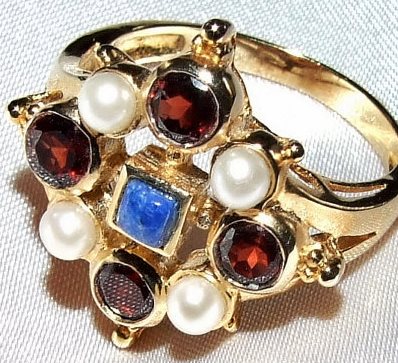
RingAncient Egyptian, Greek and Roman eras note the use of garnets in the jewelry. It was said that courageous discoverers and travelers wore Garnets for protection, as they were considered popular talismans and protective stones. It was believed in those days that Garnets illuminate the night and kept the wearer safe (www.gemstone.com).

Lapis Lazuli is a powerful stone for those who seek spiritual development. It brings mental clarity & emotional healing, and enhances judgment and wisdom. This stone is also considered strengthening to mind and body. Lapis lazuli allows us to tap our own inner power while purifying the soul and the thoughts. Helps us contact our spirit guardians. Augments strength, vitality, virility, mental clarity, illumination. Enhances psychic abilities and communication with higher self and spirit guide (http://www.sobrietystones.com).

Pearls symbolize Purity, Spiritual Transformation, Charity, Honesty, Wisdom and Integrity, all the best within us.  Pearls provide a clear vehicle for the advancing states of wisdom, as well as a clean channel for receipt of spiritual guidance. Pearls can stimulate femininity and help with self-acceptance. They remind us to walk with dignity, providing a mirror in which to see ourselves and give us insight into how we appear to others. The ragged, rough grain of sand, transformed over time slowly growing into an object of great value and beauty. With it’s humble beginnings, Pearls symbolize innocence and a pure heart, and help us get in touch with the simple honest things of life (http://www.sobrietystones.com).
Electronic Media: Urban v. Nature-Based Tourists

Standard
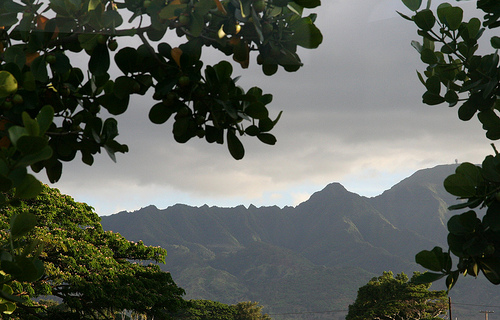
Pretty view from the bus! Image by TheGirlsNY. Retrieved from FlickR. Used under Creative Commons Licensing.

Pretty view from the bus! Image by TheGirlsNY. Retrieved from FlickR. Used under Creative Commons Licensing.

I wanted to pass along research recently released by the University of Minnesota-Tourism Center. It compares the use of electronic media among urban and nature‐based tourists. The research found that almost half of the nature-based travelers used the advice of friends/family to plan a trip oppose to on-line sites and travel reviews. However, during the trip they tended to accessed websites and Facebook to share their experiences.  Non-nature (urban) based tourists showed a slightly higher reaction to social media that ultimately responded in a change in travel plans.

Click here for an additional snapshot of the research finding from Compare uses of electronic media, among urban nature‐based tourists by Andrew Oftedal, M.S., Arielle Courtney,Graduate Research Assistant,&Ingrid Schneider, Ph.D

So what does this mean? It could be used to evaluate social media in the tourism industry based on the data collected and intended audience. In addition, this information can be tracked over a given period of time (longitudinal study) to identify shifts in technology trends such as  types of media/devices used.


Alternative Collectibles: Found & Made

Standard

Sometimes the hunt for unique found items is an important part of the experience. So, while on your next trip consider these alternative items/collections!

Natural found items could include:

  • Rocks or shells found on walks.
  • Sand to be saved in small containers from each beach around the state, country or world.
  • Driftwood for a mantel display.
  • Leaves for each annual fall trip-pressed and assembled in an album.

Made items assembled with a common theme could include:

  • A photograph using the same location: city limit signs, franchise, pose, etc.
  • A journal or doodle pad with drawings, quotes from people met along the way or funny stories of mishaps.
  • Travel boxes, scrapbook, photo album, etc.
  • Homemade passport (made before or after a trip). Have business owners, clerks or tour guides to sign off inside.
  • Insert HERE any unique or creative way to display, reuse or re-purpose something found along the way;)

Tip: Think of connecting these collectibles to your bucket list, i.e. travel to the top 10 surfing beaches in the world and bring home sand from the beach. Or collect leaves during a fall foliage tour in New England. Hike/rock climb in national parks across the country or in your home state-search for unique rocks that signify to geomorphology of the area.

Gifted Travel Treasures: A Parisian Painting

Standard
Image by DarkRose42 some rights reserved

Image by DarkRose42 some rights reserved

As a sophomore in college; I wanted to study abroad in Toulouse which is located in southern France.  I had a passion for the french culture and language after studying five years both in high school and post secondary. For many reasons, some outside of my control, I never studied abroad. And as a result, I stopped my studies and refocused on a very different career path.

Years later I took a trip to Paris in July. Alongside the Sacre Coeur, I wandered through what I refer to as an artist’s quarter. It was a street exhibit area filled with stands brimming with art. I searched for an original drawing or painting to commemorate finally arriving in France. But, the time passed too quickly and I was late returning to the tour group. I never found my treasure that day.

The following Christmas my brother and his wife came to visit for the holidays. They handed me a small rolled canvas brought back from their recent trip to France and the same artist’s quarter. To my surprise, it was a one of a kind, impressionist style painting. The image was of couples around the early 1900’s (based on attire) walking along a lamp lit street. The Eiffel Tower was projected in the background-washed in a warm sunset.

Whether you are an avid or a novice traveler there is something enduring about acquiring tangible items to reflect our intangible experiences. RTreasures can be bought by and for ourselves. Or for others with the intent as simple as a thinking of you gift or something with extreme intrinsic value. Today, this small Parisian painting is still one of my most prized possessions! And it reminds me of my trip, that one choice can change the future, and how blessed I am to have family.

I invite you to share your stories in the comment section.

RTravel Apps: European Exploration: The Art of Discovery!

Standard
Image by Smabs Sputzer some rights reserved

Image by Smabs Sputzer some rights reserved

GAMeS Lab at RU has launched a free app for young explorers called European Exploration: The Art of Discovery made available through iTunes. This application allows little travelers (ages 4+)  to role play as 15th Century captains responsible for everything from hiring a crew to building their ships. While sailing around the world the game introduces historical content intended to increase awareness and knowledge about various locations around the world. I love that although these are fictional voyages, the process instills pragmatic skills helpful even in modern day explorations; the art of cartography, the importance of money management, the ability to navigate problems that arise during a trip, etc.  When you are ready-click here to launch your (or your child’s) first voyage!

*Rate this app in the comment section below!

After Effects of Pinterest!

Standard
Some rights reserved by MKH Marketing

Some rights reserved by MKH Marketing

In March 2010, the first beta (prototype) site for Pinterest was launched with limited access to a small group of professional colleagues, along with close friends and family, of it’s co-founders. The purpose of the site was to allow users to bookmark or “pin” images, videos, etc. in which they found of “interest” to virtual bulletin boards, categorized by themes. By February 2013, Pinterest boasted more than 48 million users and was valued at $2.5 billion dollars (Reuters).

As a novice photographer, I am completely enthralled by this site. The images “pinned” on the travel board are nothing short of breathtaking. They epitomize ” idealistic” settings beneath secret waterfalls,  resorts nestled on top of mountains, castles that seem to have grown from the earth, exotically staged gardens in hidden corners all over of the world. Although I am sure that some are computer enhanced, they are of an amazing quality that would be difficult to emulate. Although perfection is in the eye of the beholder, these images are almost an adult traveler’s version of a fairy-tale that is often a stark contrast to what most people see when they gaze out their kitchen windows.  First, I would like to thank Pinterest travel contributors who have given anyone with internet, access to an incredible trip to utopia.

Utopia =  an ideal place or state a (dictionary.com.)

One reason why people travel is to seek inspiration. The scenes that lay before us in our travels do not always generate a feeling of safety nor are they always idealistic. But they can be!  The word utopia was first mentioned in 1516 by author Sir Thomas More, “Utopia” as a fictional place.  I believe that some people travel in search of a modern-day (non-fiction) utopia of sorts!  I am not sure what it would be like to actually live in or next to these places?  But for this week, whether it is raining, snowing or the sun is shining in your corner of the world, take a moment and travel virtually with Pinterest.  Be awe-inspired!


Participating in NAI

Standard

NAIAl Leftridge, Ph.D,  is hosting an interpretive writing workshop in Minnesota this weekend. In the tourism field the word “interpretation” goes beyond conventional languages. It is the concept of conveying something to an audience through words, sounds, images, etc.  Mr. Leftridge and myself are members of the National Association for Interpretation (NAI). This organization is the offspring of the Association of Interpretive Naturalists (founded in 1954) and the Western Interpreters Association (founded in 1965).  NAI views interpretation as a mission-based communication process that forges emotional and intellectual connections between the interests of the audience and the meanings inherent in the resource.  Individual members (5,00o+) include those who work at parks, museums, nature centers, zoos, botanical gardens, aquariums, historical and cultural sites, commercial tour companies, and theme parks. Commercial and institutional members include those who provide services to the heritage interpretation industry. Additional information about  NAI can be found on their website. I encourage you to think about the  role it plays in the tourism industry and ways it might connect to your travels.

11.4% More!

Standard
Some rights reserved by Nigel's Europe

Some rights reserved by Nigel’s Europe

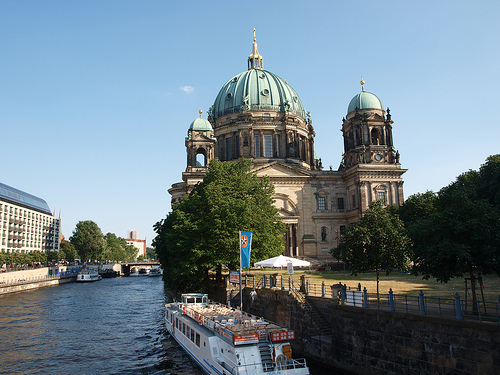
According to Berlin City Magazine, “Tourism is growing in Berlin stronger than in any other big city worldwide. 11 Million  visitors visited Berlin in 2012, and of this 4 Million were from foreign countries.  The number of overnight stays in hotels grew 11.4% to 25 Million in the previous year. Berlin, therefore has become the top 3 travel destination in Europe, just behind Paris and London.  Overall overnight stays and total visitor numbers have doubled in the past 10 years.”

If you are interested in investigated Berlin as a possible travel destination click here to learn more!

The Social Life of Urban Spaces!

Standard
Some rights reserved by Common.Wikimedia

Some rights reserved by Common.Wikimedia

As a college student several years ago, I studied Local and Urban Affairs which has now been renamed as Community Planning/Studies. I remember sitting in the class watching what I thought even at that time was a VERY old (most likely a VHS) version of an educational documentary on the design of public spaces.  It reviews public/group behavior and what makes a public space “desirable.” What I remembered most was the fact that we (the public) desired choices. In the video they talked about seating, and how the perception of control or ability to choose the location of a chair was important even if it was moved only a few inches for it’s original location-no more in or out of the sun.

The orator was William Whyte, who at the time was a Planning Commissioner for the City of New York. Later his work launched him to the forefront as a leading expert in the design of public spaces.

William passed away in January (2010), so in honor of his life’s work and as a continuation of my previous posts on public spaces-here is a link to his video, “The Social Life of Urban Spaces.”  Don’t say I didn’t warn you about it being old 😉