Author Archives: Michelle

Participating in NAI

Standard

NAIAl Leftridge, Ph.D,  is hosting an interpretive writing workshop in Minnesota this weekend. In the tourism field the word “interpretation” goes beyond conventional languages. It is the concept of conveying something to an audience through words, sounds, images, etc.  Mr. Leftridge and myself are members of the National Association for Interpretation (NAI). This organization is the offspring of the Association of Interpretive Naturalists (founded in 1954) and the Western Interpreters Association (founded in 1965).  NAI views interpretation as a mission-based communication process that forges emotional and intellectual connections between the interests of the audience and the meanings inherent in the resource.  Individual members (5,00o+) include those who work at parks, museums, nature centers, zoos, botanical gardens, aquariums, historical and cultural sites, commercial tour companies, and theme parks. Commercial and institutional members include those who provide services to the heritage interpretation industry. Additional information about  NAI can be found on their website. I encourage you to think about the  role it plays in the tourism industry and ways it might connect to your travels.

Interpretive Writing Workshop this Weekend!

Standard

Interpretive Writing Workshop

Write compelling interpretive messages!
Minnesota Valley National Wildlife Refuge
3815 American Blvd East, Bloomington, Minnesota
May 4, 2013 from 9 am to 4:30 pm

Alan Leftridge, Ph.D., is the author of Interpretive Writing, and specializes in interpretive training seminars across North America is offering a workshop to discuss the basics of interpretive writing that apply to signage, exhibit labels, brochures, websites, public service announcements, books, and magazines.  After this workshop you will understand how to create clear, dynamic, and concise interpretive texts, reveal meanings, and ways to excite visitors about your site, whether it is a museum, park, zoo, nature center, or aquarium.

Topics include: The Interpretive Writing Process · Concept Mapping · Universal Concepts · The Five Elements of Interpretive Writing · Meeting Your Audience’s Needs · Concise Wording · Keeping Your Reader’s Attention · The Importance of Fluency · Redundant Wording · Understanding Readability Indexes · Using a Human Interest Scale ·Capturing Your Reader’s Attention · What to Avoid · Connecting with a Narrative · The Editing Process · Evaluation.

The fee is $295 and includes instruction, refreshments, handouts, and a copy of the Interpretive Writing textbook.

To register contact Dr. Leftridge, leftridge@blackfoot.net, 406.754.2940. Access leftridge.com for additional information.

Travel Quotes!

Standard

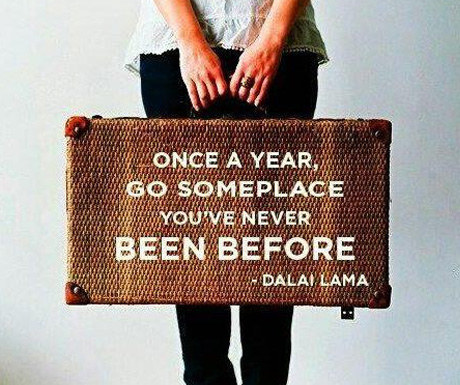
quotetravelThe written word has been referred to as food for the soul. Like many people, I am drawn to idealistic and inspirational messages conveyed through quotes.

So for those travelers looking for a little something more today, here is a link to A Luxury Travel Blog post written by Paul Johnson. Paul lists his top 10 travel quotes of all time. Click here to read the results!

11.4% More!

Standard
Some rights reserved by Nigel's Europe

Some rights reserved by Nigel’s Europe

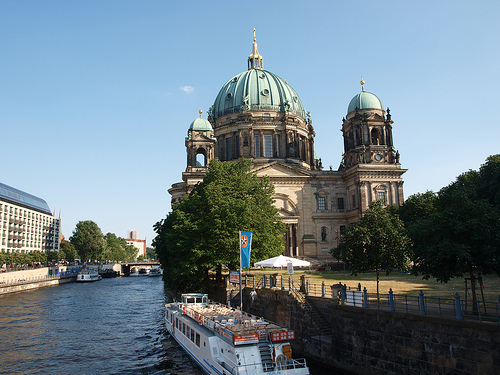
According to Berlin City Magazine, “Tourism is growing in Berlin stronger than in any other big city worldwide. 11 Million  visitors visited Berlin in 2012, and of this 4 Million were from foreign countries.  The number of overnight stays in hotels grew 11.4% to 25 Million in the previous year. Berlin, therefore has become the top 3 travel destination in Europe, just behind Paris and London.  Overall overnight stays and total visitor numbers have doubled in the past 10 years.”

If you are interested in investigated Berlin as a possible travel destination click here to learn more!

The Social Life of Urban Spaces!

Standard
Some rights reserved by Common.Wikimedia

Some rights reserved by Common.Wikimedia

As a college student several years ago, I studied Local and Urban Affairs which has now been renamed as Community Planning/Studies. I remember sitting in the class watching what I thought even at that time was a VERY old (most likely a VHS) version of an educational documentary on the design of public spaces.  It reviews public/group behavior and what makes a public space “desirable.” What I remembered most was the fact that we (the public) desired choices. In the video they talked about seating, and how the perception of control or ability to choose the location of a chair was important even if it was moved only a few inches for it’s original location-no more in or out of the sun.

The orator was William Whyte, who at the time was a Planning Commissioner for the City of New York. Later his work launched him to the forefront as a leading expert in the design of public spaces.

William passed away in January (2010), so in honor of his life’s work and as a continuation of my previous posts on public spaces-here is a link to his video, “The Social Life of Urban Spaces.”  Don’t say I didn’t warn you about it being old 😉

Public Art Center Stage!

Standard
Photo by Berry Webber

Photo by Berry Webber

An emerging trend in the United States is the infusion of art within public spaces. In large part due to local support from organizations such as Forecast Public Art and State Legacy funding. Public art is often larger in scale, difficult to replicate and custom designed to interact with its intended surroundings. As a result, it has a unique persona wrapped in exclusivity and distinctiveness! It is because of these qualities public art has been given a rare opportunity to serve as a geographical marker associated with a particular physical location.

Community art can also mean collaboration with residents, students, community leaders, and/or other artists. A greater focus is being placed on work communicating historical content and incorporation of sustainable art. In addition, interactive art adds another layer of involvement with tourist visually and because you may at some point become a part of an exhibit. Invoking multiple senses creates a greater emotional connection and therefore an increased holistic experience.

Three very different examples of public art:

  • Small Town: The city of Holdingford is a small town located in central Minnesota. Though a series of grants the community installed public art  along a regional recreation trail system (Lake Wobegon Trail). 
  • Big City:  ArtAround is an interactive map that allows the user to search by type of art (murals, statues, street art, museums, etc.) and by location. The map also displays current events and festivals and public art venues. Another interesting feature of the map is the ability to filter the results by date. Click here to learn more about public art in and around Washington D.C.
  • International:  The city of Berlin, Germany is a living showcase of art infused with educational (interpretive) opportunities for visitors. The city has become a living memorial to the effects of war and uses public space as a medium to convey its culture, history, people and their stories. Click here to learn more about Denkmal fur die ermordeten Juden Europas an example of interactive public art in Berlin.

Suggested Reading for Traveling Families

Standard

3146720

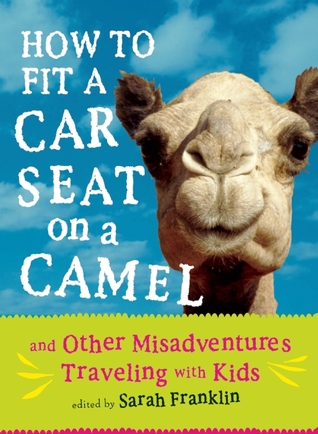
This week, RCompass points to a must have book, for those brave parents traveling with kids, “How to fit a car seat on a camel,” by Sarah Franklin. The author talks about the adventures and misadventures of traveling with children-serving as a reminder of what it means to travel with kids both young and old.  Click here to view more of her insightful book.

Feel free to share your misadventures in the comment section below!

RAdventure

Standard

Although there are many families that successfully travel with children of all ages, I believe there is a magical point in which a child holds onto memories-processing and reinterpreting their surroundings and experiences more fluently.  When, exactly does this occur? I imagine it is different for every child. I am also sure that the field of developmental psychology has studied this concept extensively. But for me I saw the signs of a pending traveler after taking a mini trip with my extended family in October.  I noticed how excited my son was simply exploring eclectic shops, trying new restaurants and sightseeing. We openly debated if we should plot out the day or make a definitive choice to wander freely.  I took it as a sign-he was finally old enough to begin composing his personal inventory of places traveled.

As a part of my 2013 New Year’s resolution to make connections with family; I felt the need to create what I hope will become a new tradition. Beginning 2013, we (my son & I) will plan 1 unique get-away each year until he graduates from School (9 trips in all)!

Here were the parameters I chose to set:

–          It will include a minimum of one stay overnight,
–          Two thirds of the trip destinations will be located within the United States
–          The first trip will be announced on his birthday in June,
–          He must successful pass each grade and all subjects,
–          Variety will be key

  • Use different modes of transportation (train, boat, bus, plain, automobile, etc.)
  • Identify types of travel (alternative vs. mass)
  • Explore diverse sights (historical, natural, manmade, etc.)
  • Experiment with various travel experiences (adventure, volunteer, etc.)

My Goals:

–          Start simple
–          Establish a tradition
–          Build memories (although I anticipate not all will be positive nor perfect)
–          Incorporate teachable moments
–          Encourage him to set goals
–          Ignite personal connections
–          Enlist my existing knowledge of travel and expand
–          Commemorate another year (school-life-love-family)

 [Layers] tourism degree, transportation planner, new experiences, annual resolutions, birthdays, celebrations, achievements, family, traditions, parenting, goal setting, lifelong learning, and variety.